
Gentle Pregnancy Care for Pelvic Balance
The Webster Technique is a gentle chiropractic approach used during pregnancy. It checks the pelvis and sacrum (the base of the spine) and uses light adjustments to help ease pelvic imbalance and the discomfort that can come with it. At Life Chiropractic’s Phoenix–Ahwatukee and North Scottsdale offices, Dr. M. James Dionisio (Dr. D) uses the Webster Technique as part of our prenatal chiropractic care.
Many expectant parents ask about it when their baby is breech. To be clear, the Webster Technique doesn’t turn a baby, and we can’t promise any change in your baby’s position. Decisions about your baby’s position and your birth plan belong with your OB or midwife. What we can do is check your pelvis, explain what we find and, if care is a good fit, help you stay more comfortable as your body changes.
Is this you?
- One side of your low back or hip hurts more than the other.
- Your pelvis feels stuck or achy after standing, walking or driving.
- Your OB or midwife has mentioned your baby’s position, and you’d like a gentle option alongside their care.
- You’re in your second or third trimester and want to stay as comfortable as you can.
If this sounds like you and your OB or midwife has no concerns, start with a free consultation. Book your free consult or tap to call: Call Ahwatukee: 480-460-1399 | Call Scottsdale: 480-563-5000
What Is the Webster Technique?
Developed by the late Dr. Larry Webster, founder of the International Chiropractic Pediatric Association (ICPA), the Webster Technique is a specific chiropractic analysis and adjustment protocol. It targets the sacroiliac joints, round ligaments, and surrounding muscles and ligaments of the pelvis. The goal is to reduce tension and imbalance in these areas.
The technique involves a series of gentle, precise adjustments performed while the mother lies comfortably on her side or uses a specialized pregnancy table. These adjustments release tension in the uterus and supporting structures, improving biomechanical function without any twisting or high-velocity maneuvers. It’s considered safe throughout all stages of pregnancy, with particular emphasis in the second and third trimesters when fetal positioning becomes more critical.
According to the ICPA, the Webster Technique is used to optimize the mother’s pelvic function, thereby supporting the natural physiological processes of pregnancy and birth. Learn more about the Webster Technique certification and its applications from the ICPA.
How the Webster Technique May Help
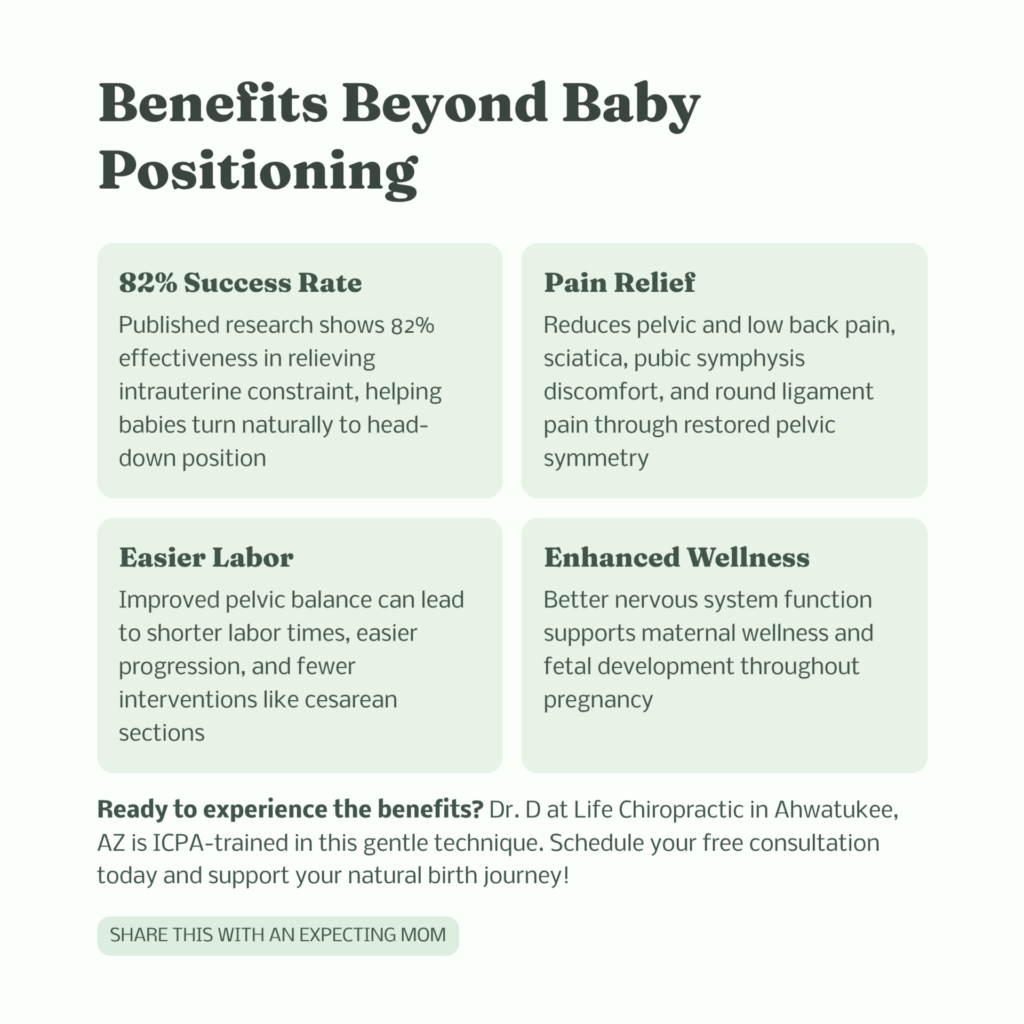
Research on the Webster Technique is limited, so we don’t promise it will change your baby’s position, shorten labor or affect how you give birth. What it may help with:
- Low back, hip and pelvic discomfort as your body changes
- Ease of movement, such as walking, climbing stairs or rolling over in bed
- Round ligament discomfort for some women
- A drug-free option to use alongside your prenatal care
The American Pregnancy Association has a helpful guide to chiropractic care during pregnancy.
Your First Webster Technique Visit
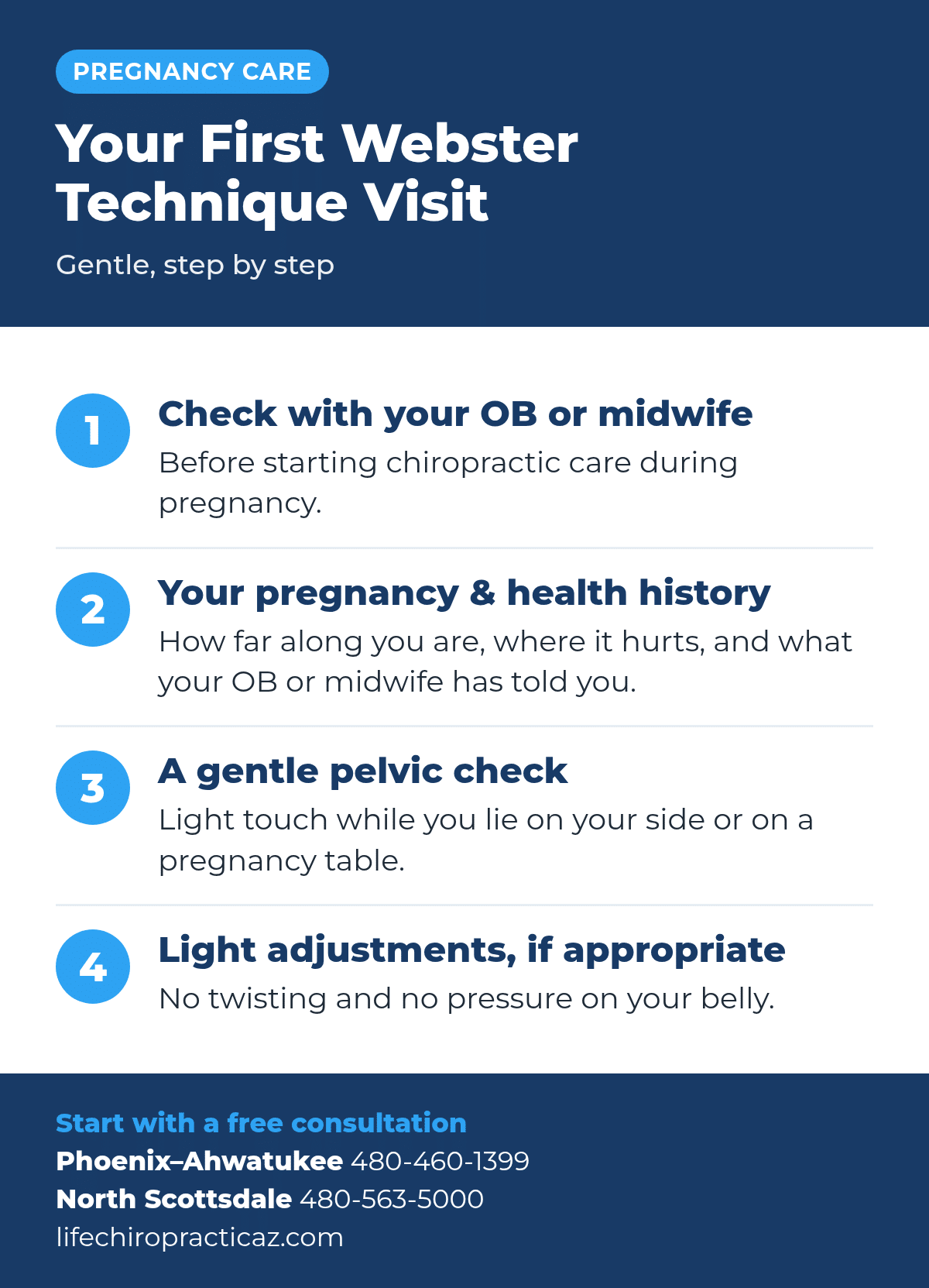
Your first visit is about comfort and answers:
- Your pregnancy and health history. How far along you are, where it hurts, any pregnancy complications, and what your OB or midwife has told you.
- A gentle pelvic check. Dr. D looks at your posture and checks your pelvis and sacrum with light touch, while you lie on your side or on a pregnancy table.
- A clear explanation. We explain what we found and whether the Webster Technique or other prenatal care is a good fit.
- Light adjustments, if appropriate. No twisting and no pressure on your belly. We may also suggest prenatal massage or simple home stretches.
Curious whether the Webster Technique is right for you? The consultation is free, and there’s no pressure to start care.
Book your free consult | Call Ahwatukee: 480-460-1399 | Call Scottsdale: 480-563-5000
This technique pairs beautifully with our broader prenatal chiropractic services. For example, if you’re also dealing with back pain, the adjustments can complement strategies outlined in our post on managing back pain during pregnancy with chiropractic care.
When to Call Your OB, Midwife or 911 First
Chiropractic care doesn’t replace prenatal medical care. Call your OB or midwife right away, or call 911 in an emergency, if you have:
- Vaginal bleeding or leaking fluid
- Regular contractions or pelvic pressure before 37 weeks
- Your baby moving less than usual
- A severe headache, vision changes, or sudden swelling of your face or hands
- Severe belly pain, a fever, or pain and swelling in one calf
- Chest pain or trouble breathing
Everyday Comfort Tips
To maximize the benefits:
- Stay active with pregnancy-safe exercises like walking, swimming, or prenatal yoga to maintain mobility.
- Use supportive positions during sleep (side-lying with pillows between knees and under the belly).
- Maintain good posture and avoid prolonged sitting to prevent added strain on the pelvis.
Check with your OB or midwife before starting any new exercise during pregnancy.
Webster Technique FAQs
Will the Webster Technique turn my breech baby?
We can’t promise that. The Webster Technique focuses on pelvic balance and comfort. It doesn’t turn a baby. Your OB or midwife will talk with you about your baby’s position and your options.
Is the Webster Technique safe during pregnancy?
It’s a gentle, low-force technique with no twisting and no pressure on your belly. Like any care, it isn’t right for everyone, so check with your OB or midwife first and tell us about any pregnancy complications.
Does it hurt?
Most women describe it as gentle pressure. If anything feels uncomfortable, tell us and we’ll adjust or stop.
What happens at my first visit?
We go over your pregnancy and health history, gently check your pelvis and posture, and explain what we find before any care.
How many visits will I need?
It depends on how far along you are, what we find and how you’re feeling. We explain our recommendation after your first visit and check in at each visit.
When in pregnancy can I start?
We see patients throughout pregnancy. Many start in the second or third trimester, when discomfort tends to build. Check with your OB or midwife first.
Is the consultation really free?
Yes. There’s no charge for the consultation. If you decide to go ahead with care, we’ll go over the cost first.
Talk to Us About the Webster Technique
Pregnancy comes with enough to think about. If your back, hips or pelvis are making it harder, book a free consultation at our Phoenix–Ahwatukee or North Scottsdale office. We’ll listen, check your pelvis and tell you honestly whether the Webster Technique is a good fit. You can also read about pregnancy back pain and prenatal massage.
- Book online: Book your free consult
- Phoenix–Ahwatukee (4722 E Ray Rd Ste 5): Call 480-460-1399
- North Scottsdale (8900 E Pinnacle Peak Rd Ste E-5): Call 480-563-5000