
Headache and Migraine Chiropractor in Phoenix–Ahwatukee
Headaches come in different kinds, and they don’t all respond to the same care. Some start in the neck, some come from muscle tension, and migraine is a brain-based condition with its own triggers. Life Chiropractic sees people with recurring headaches at our Ahwatukee office on Ray Road and our North Scottsdale office. This page explains the main headache types, the warning signs that need emergency or medical care, what the research says about chiropractic care for each type, and what to expect when you come in.
Get medical help right away for these headache warning signs
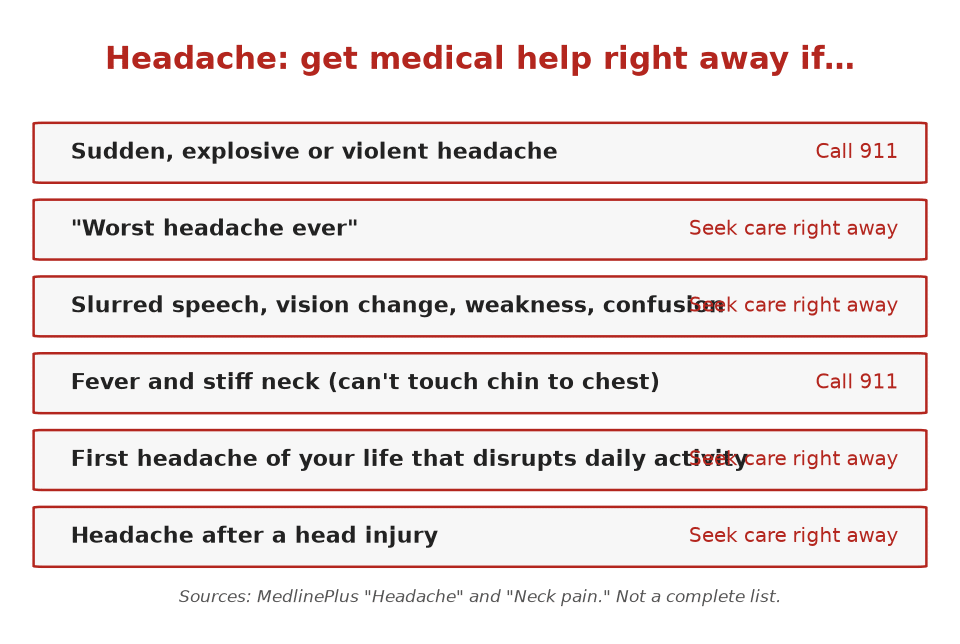
Most headaches aren’t dangerous, but some are. The U.S. National Library of Medicine’s MedlinePlus encyclopedia lists signs that need medical help right away:
- A headache that comes on suddenly and is explosive or violent. Call 911.
- Your “worst headache ever,” even if you get headaches regularly
- Slurred speech, a change in vision, trouble moving your arms or legs, loss of balance, confusion or memory loss
- A headache that gets worse over 24 hours
- Fever, stiff neck, nausea and vomiting with the headache
- A headache that comes with a head injury
- A severe headache in one eye with redness in that eye
- New headaches, especially if you’re over 50, or headaches with vision problems, pain while chewing or weight loss
- A new headache if you’ve had cancer or have a weakened immune system
If any of these apply, please see a doctor or go to the emergency room instead of booking with us.
Three common headache types, side by side
| Tension-type headache | Cervicogenic (neck-related) headache | Migraine | |
|---|---|---|---|
| What’s behind it | Tense or contracting neck and scalp muscles (MedlinePlus) | A problem in the neck that causes head pain (NCCIH) | Abnormal brain activity involving nerve pathways and chemicals (MedlinePlus) |
| How it often feels | Dull pressure or a tight band; scalp, temples or back of the neck; usually no nausea | Pain that starts in the neck or base of the skull; may worsen with neck movement or posture | May be preceded by an aura: blind spots, zigzag lines, flashing lights, numbness or tingling |
| Common triggers | Stress, fatigue, holding the head in one position (computer work, fine hand work) | Neck strain, posture, past neck injury | Missed sleep, caffeine withdrawal, alcohol, hormone changes, loud noise or bright light |
| What the research says about spinal manipulation | Small short-term improvements in function and moderate in pain, based on little evidence | May reduce how often and how hard headaches hit (2020 review of 7 studies) | May reduce migraine days and intensity; results called preliminary (2019 review of 6 studies) |
| Who leads care | Your doctor and/or chiropractor | Your doctor and/or chiropractor | Your doctor or neurologist, with chiropractic care as a possible add-on |
The research column comes from the NIH’s National Center for Complementary and Integrative Health. Many people have more than one type, so the exam matters more than the label.
Why posture and desk work come up so often
MedlinePlus notes that any activity that keeps your head in one position for a long time, such as typing, computer work or fine hand work, can trigger a tension headache, as can sleeping with your neck in an awkward position. Those are the same habits that strain the neck, which is why our neck pain page and this one overlap. If jaw clenching or grinding is part of your story, see our TMJ page too.
What your first visit looks like
- Free consultation. We talk about how often your headaches come, how long they last, where they hurt and what seems to set them off. Bring a headache diary if you have one.
- Red-flag screening. We go through the warning signs above and your health history and medications. If anything points to a medical cause, we refer you out.
- Exam. We check neck and upper-back movement, posture, the muscles at the base of the skull and shoulders, and basic nerve function.
- X-rays if appropriate. We can take them in our office. If you need an MRI, we refer you to a provider who can order it.
- Your plan. We explain whether we think your headaches have a neck or muscle component that chiropractic care may help, and what we’d suggest. For migraine, that means working alongside your doctor, not instead of them.
- Re-checks. We compare how often and how hard your headaches hit over time. If things aren’t improving, we change the plan or refer you out.
How we treat headaches at Life Chiropractic
For more than 30 years, Life Chiropractic has practiced corrective chiropractic care in Ahwatukee, and today we see patients at our North Scottsdale office too. Our approach starts with listening with compassion and understanding. We ask about your life history, any previous injuries and your medical background before anything else. Many of our patients come to us with long-standing problems, so we look for the underlying cause rather than just the symptoms, and we tell you honestly whether chiropractic care is a good fit.
For headaches, we look closely at your neck, upper back and posture, and at the patterns and triggers behind your headaches, with digital X-rays when they’re appropriate. Your plan may include gentle adjustments, Graston soft-tissue work and massage, along with posture and lifestyle guidance. For migraine, we work alongside your doctor, not instead of them.
We invite your loved ones to join the findings and recommendations meeting after your initial consultation, so they can see what you’ve been going through and ask their own questions. Then we explain what we found in plain language before any care begins. If you start care, we re-check your progress with exams and, when appropriate, X-rays, and we refer you out for an MRI or a surgical opinion when that’s the right next step. Every adjustment is gentle and adapted to your age, size and comfort. As we like to say, healthy living begins with Life.
Tools we may use for headaches
- Chiropractic adjustments to the neck and upper back when appropriate, and only with your agreement.
- Graston technique for tight muscles in the neck, upper back and base of the skull.
- Massage for muscle tension. MedlinePlus notes that people with tension headaches often rub their scalp, temples or the base of the neck for relief.
- Posture and workstation guidance for desk, phone and driving habits.
- Trigger tracking with a headache diary you can share with your doctor.
Safety: what you should know about neck adjustments
The NIH notes that mild soreness, stiffness or headache are common after spinal manipulation and usually fade within 24 hours. Neck manipulation has also been linked to rare tears in the arteries of the neck that can lead to stroke. These are very rare, but they’re why we take a careful history, don’t adjust anyone with warning signs, and offer soft-tissue options if you’d rather not have your neck adjusted. If you notice sudden severe headache, vision change, slurred speech, dizziness or weakness at any point, call 911.
Everyday steps that may help
- Keep sleep regular. Changes in sleep are a listed migraine trigger.
- Go easy on caffeine changes. Caffeine withdrawal is another listed trigger.
- Drink water through the day. In the Phoenix heat, especially outdoors, it’s easy to fall behind.
- Break up screen time and reset your posture often. Our stand-up desk article has ideas, and stress management techniques may help with tension-type headaches.
For more reading, see our pages Chiropractor for Migraines and chiropractic treatment for pain.
Headache care in Ahwatukee and North Scottsdale
Our Phoenix–Ahwatukee office is at 4722 E. Ray Rd., Ste 5, near the I-10 and close to Ahwatukee Foothills, Chandler, Tempe and south Phoenix. Visit our Ahwatukee office page or North Scottsdale office page for hours and directions.
Frequently asked questions
Can a chiropractor help with headaches or migraines?
Research is promising but early. The NIH’s National Center for Complementary and Integrative Health reports that a 2020 review found spinal manipulation may reduce how often and how intensely cervicogenic (neck-related) headaches happen, and a 2019 review found it may reduce migraine days and intensity, though reviewers called those migraine results preliminary. For chronic tension headache, a 2020 analysis linked manipulation with short-term improvements, based on little evidence.
When is a headache an emergency?
MedlinePlus says to call 911 for a sudden, explosive or violent headache, and to seek help right away for your “worst headache ever,” a headache with slurred speech, vision change, trouble moving your arms or legs, loss of balance or confusion, a headache with fever and a stiff neck, or a headache after a head injury.
What’s the difference between a tension headache and a migraine?
Per MedlinePlus, tension headaches usually feel dull and pressure-like, like a tight band around the head, often worse in the temples or back of the neck, and usually without nausea. Migraine is caused by abnormal brain activity, may come with an aura such as zigzag lines or blind spots, and is often set off by triggers like missed sleep, caffeine withdrawal or bright lights.
Do I still need my doctor if I see a chiropractor for migraines?
Yes. Migraine is a medical condition, and chiropractic care isn’t a replacement for your doctor or neurologist. Keep taking any prescribed medicines as directed, and tell both of us what you’re doing.
Will my neck be adjusted?
Only if it’s appropriate and you agree. NCCIH notes that neck manipulation has been linked to rare artery tears that can lead to stroke, so we screen carefully and also offer soft-tissue work like Graston and massage.
Should I keep a headache diary?
It helps. Write down when each headache starts, how long it lasts, where it hurts, and what you ate, how you slept and what you were doing. It’s useful for us and for your doctor.
Do you see kids with headaches?
Yes, with a parent present and after any red flags are ruled out. See our pediatric chiropractor page.
Book a free headache consultation
If headaches keep interrupting your work, sleep or weekends, and you don’t have any of the warning signs above, we’re glad to talk it through. Consultations are free. Call the Phoenix–Ahwatukee office at 480-460-1399 (4722 E. Ray Rd., Ste 5, Phoenix, AZ 85044), call North Scottsdale at 480-563-5000, or request an appointment online.
This page is general information, not medical advice or a diagnosis. Chiropractic care is not right for everyone, and results vary from person to person. If you have any of the warning signs above, see a medical doctor or go to the emergency room.
Schedule a Consultation
If you are struggling with migraines in Scottsdale or Phoenix, Life Chiropractic is here to help. Our team will evaluate your condition and develop a personalized plan focused on long-term improvement.
Schedule your migraine consultation today and take the first step toward lasting relief.
Call:
Scottsdale: 480-563-5000
Phoenix: 480-460-1399
or schedule a consultation to get started today.