
Your Guide to a Corrective Chiropractor
Corrective Chiropractor
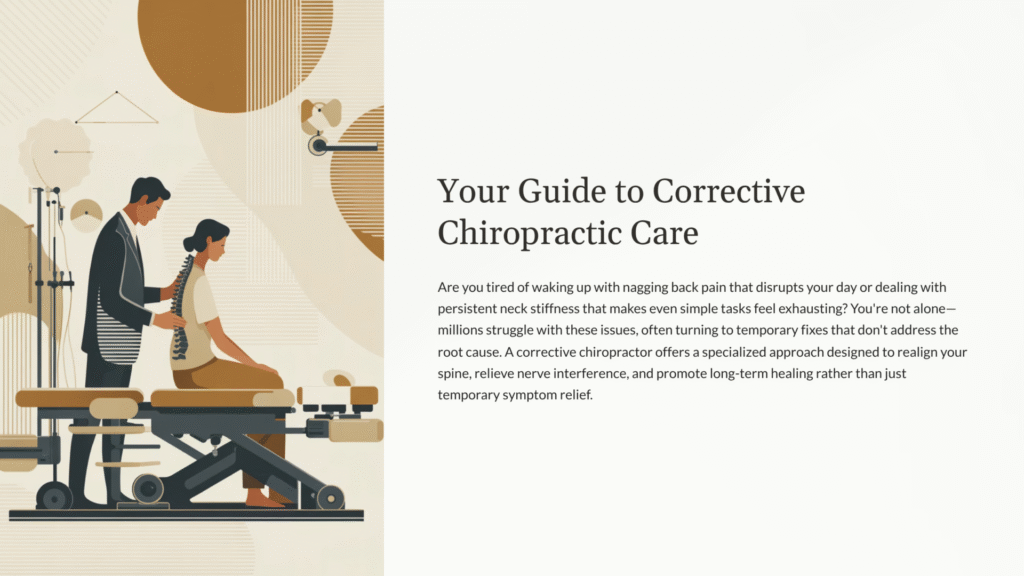
Are you tired of waking up with nagging back pain that disrupts your day or dealing with persistent neck stiffness that makes even simple tasks feel exhausting? You’re not alone—millions struggle with these issues, often turning to temporary fixes that don’t address the root cause. This process is where a corrective chiropractor comes in, offering a specialized approach designed to realign your spine, relieve nerve interference, and promote long-term healing. Unlike quick-relief methods, a corrective chiropractor focuses on structural correction for lasting stability and optimal body function.
In this guide, we’ll explore what a corrective chiropractor does, how they differ from traditional chiropractors, and the incredible benefits they offer. Whether you’re seeking pain relief for chronic conditions or aiming to enhance your overall spinal health, you’ll learn practical insights to help you decide if consulting a corrective chiropractor is the right path for you. Drawing from expert sources like Life Chiropractic’s corrective care page, we’ll break it down step by step. For additional reading, refer to this Cleveland Clinic overview of chiropractic adjustments.
What Is a Corrective Chiropractor?
Difference between General and Corrective Chiropractors
While a general chiropractor often provides immediate symptom relief through adjustments, a corrective chiropractor takes a more comprehensive approach. They emphasize long-term structural changes to the spine, addressing misalignments (known as subluxations) and nerve interference that can lead to ongoing issues. General care might offer temporary reprieve, but a corrective chiropractor aims to prevent relapse by monitoring progress and achieving maximum spinal correction. At practices like Life Chiropractic, the term means personalized plans that treat the whole person, not just the pain.
Goals of Corrective Adjustments
The core goals of a corrective chiropractor are to restore natural posture, remove nerve pressure, and enable your body to heal and function at its peak. This involves gradual rehabilitation of muscles, ligaments, and soft tissues, reducing the risk of future problems. Ultimately, it improves quality of life by allowing higher bodily function and preventing asymptomatic issues from worsening.
Common Conditions Treated
A corrective chiropractor treats a wide range of conditions beyond typical back and neck pain. They effectively address migraines, headaches, allergies, digestive issues, infertility, and even behavioral problems by targeting pinched nerves and spinal misalignments. Specific ailments include sciatica, vertigo, ear infections, high blood pressure, acid reflux, infantile colic, ADD/ADHD, asthma, restless leg syndrome, neuropathy, anxiety, fatigue, TMJ, and arthritis. A nervous system chart often used by corrective chiropractors highlights how misalignments in areas such as the cervical, thoracic, or lumbar spine can affect everything from the head’s blood supply to the sciatic nerve.
How a Corrective Chiropractor Works
Assessment and X-rays
Your journey with a corrective chiropractor begins with a thorough health history consultation, during which they review past injuries, chronic conditions, and current complaints. This helps identify underlying causes, including physical, mental, and emotional stressors. Low-dose X-rays are then used to safely image the spine, ruling out other issues and confirming the need for structural correction.
Spinal Analysis and Measurement
A thorough exam is performed next, which includes checking your temperature with digital thermography, testing your range of motion, analyzing your posture, evaluating your limbs, and performing orthopedic and neurologic tests. The corrective chiropractor analyzes your history, exam results, and X-rays to pinpoint subluxations and explain how they affect your spinal function.
Adjustment Techniques (e.g., Diversified, Cox Flexion-Distraction)
Adjustments by a corrective chiropractor are gentle and precise, customized to your needs—safe even for newborns or the elderly. Techniques build on each other to relieve nerve pressure and gradually reposition vertebrae. Standard methods include Diversified or Cox Flexion-Distraction, which focus on tailored, research-backed techniques that help restore balance without surgery.
Supportive Therapies (Therapy Bands, Traction, Exercise)
Alongside adjustments, a corrective chiropractor incorporates supportive therapies tailored to enhance recovery. These may include nutritional counseling to support balance, exercise encouragement for strength, and other modalities like traction or therapy bands to rehabilitate soft tissues. Progress is tracked with follow-up exams and X-rays to ensure ongoing improvement.
Benefits of Seeing a Corrective Chiropractor
Here is a summary chart of the key benefits of seeing a corrective chiropractor:
| Benefit | Description |
|---|---|
| Improved Posture and Alignment | Gradual restoration of natural posture through targeted adjustments, helping you stand taller and move more freely. |
| Pain Relief (Back, Neck, Headaches) | Relieving pressure on pinched nerves to eliminate symptoms like back pain, neck discomfort, and headaches faster than expected. Explore more benefits in this resource. |
| Enhanced Range of Motion | Assessments and adjustments that improve flexibility and mobility, making daily activities easier and reducing stiffness. |
| Long-Term Spinal Health | Decreases the risk of future issues, boosts overall healing, enhances immunity, reduces medication needs, and promotes better sleep and energy levels. Patients often report systemic improvements, from better digestion to reduced stress. |
What to Expect from a Corrective Chiropractor
Here is a summary chart of what to expect during your experience with a corrective chiropractor:
| Stage | Description |
|---|---|
| Initial Consultation and Evaluation | A welcoming environment where your full health story is heard. Includes consultation, exam, and X-rays, with detailed explanations of findings. |
| Treatment Plan and Frequency | A custom plan outlining duration (from weeks to months), frequency (often intensified for quicker results), and costs. Referrals if not suitable. |
| Typical Session Walkthrough | Gentle adjustments building on prior progress, plus supportive therapies. Staff explain everything for comfort and understanding. |
| Home Exercises and Lifestyle Recommendations | Guidance on exercises, nutrition, and changes to support healing outside the office, empowering you to maintain results. |
Finding the Right Corrective Chiropractor
Credentials and Certifications to Look For
Seek a corrective chiropractor with expertise in structural correction, such as those at Life Chiropractic, who emphasize nervous system health. Look for advanced training in spinal analysis and a patient-centered philosophy.
Questions to Ask During Your First Visit
Inquire about their approach to corrective vs. traditional methods, expected treatment timeline, techniques used, and how they monitor progress. Ask whether they handle specific conditions, such as sciatica or scoliosis.
Reading Reviews and Patient Testimonials
Check sites like Yelp for honest feedback. Positive reviews often highlight long-term results and compassionate care, as seen with Life Chiropractic patients.
FAQs About Corrective Chiropractors
- How long until I see results? Many patients notice symptom relief after the first few adjustments with a corrective chiropractor, with full correction taking weeks to months, depending on your condition. Progress is monitored to ensure lasting changes.
- Is seeing a corrective chiropractor safe for children/elderly? Yes, adjustments are gentle and safe for all ages, from newborns to those over 100. They’re tailored to individual needs, making them suitable for kids with behavioral issues or elderly people with mobility concerns.
- Will a corrective chiropractor help sciatica/herniated discs/scoliosis? Absolutely—they target nerve interference and misalignments that cause sciatica and can address herniated discs or scoliosis by improving spinal structure and function. Consult a specialist for a personalized assessment.
- How much does a corrective chiropractor cost? Costs vary by plan and location, but many insurances cover part of the care. Discuss specifics during your consultation, as limitations may affect full treatment; practices like Life Chiropractic aim for affordable, high-quality care.

Patient Success Stories
Hear from real patients who’ve experienced transformative results through a corrective chiropractor at Life Chiropractic:
- Manuel’s Story: After 20 years of severe back pain from his job in concrete work, Manuel struggled with mobility—he even needed 10 minutes just to stand up straight in the mornings. But after two months of treatment, his overall health improved dramatically. “I can move freely now,” he shares. “The staff is friendly and knowledgeable—highly recommend!”
- Stacey’s Story: Stacey dealt with chest tightness, headaches, and discomfort that baffled her primary doctor, with prescriptions offering no relief. After her first adjustment, she felt 100% better instantly and normal the next day. “Dr. D has helped me and my family stay feeling good,” she says.
These stories illustrate how addressing root causes with a corrective chiropractor leads to profound, lasting improvements.
Conclusion & Call to Action
Consulting a corrective chiropractor isn’t just about easing pain—it’s about restoring your body’s natural alignment for better posture, reduced discomfort, enhanced mobility, and sustained spinal health. By focusing on structural correction and nerve function, they tackle conditions from migraines to sciatica, offering a path to a higher quality of life.
If you’re ready to experience these benefits, book a consultation today at Life Chiropractic in Phoenix, AZ. Visit their corrective care page for more details, or call their Ahwatukee location at 480-460-1399 or North Scottsdale at 480-563-5000. As a special offer, download a free posture checklist from their site to start assessing your spinal health at home. Don’t wait—take the first step toward lasting wellness!
0 Comments